


Should Teachers Use AI to Write End-of-Year Reports?
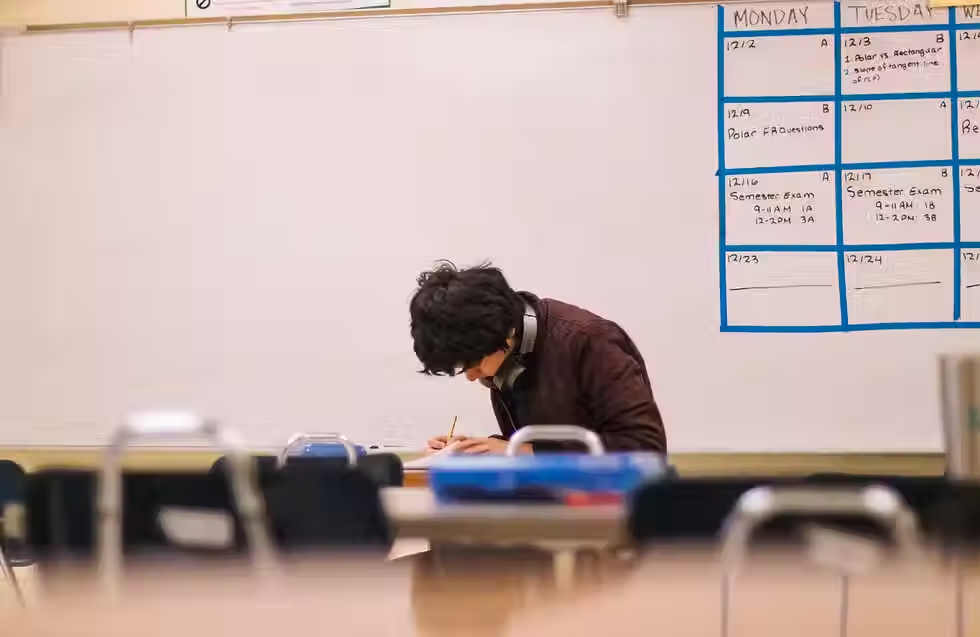
As summer approaches and the school year winds down, one task looms large for teachers across the country: writing end-of-year reports. For many, this process is time-consuming, emotionally draining, and difficult to balance with the whirlwind of final assessments, transition meetings, and celebrations.
In 2025, a new question is emerging: Should teachers be using AI to help write their reports?
The Promise of AI Support
Artificial intelligence tools like ChatGPT and other generative writing assistants are capable of producing well-structured, grammatically correct, and contextually appropriate text. These tools can draft summaries based on bullet points, suggest phrasing for common strengths and next steps, or even help with tone and clarity. For overworked educators, the potential benefits are obvious:
Time-saving: AI can speed up repetitive aspects of writing, allowing more time for reflection or personalisation.
Consistency: Especially when writing dozens (or even hundreds) of reports, AI can help maintain a clear, professional tone.
Support for neurodiverse or ESL teachers: For teachers who find writing reports particularly challenging, AI can level the playing field.
The Ethical and Professional Considerations
But just because something can be done, doesn’t mean it should—at least not without careful thought.
Student Individuality Matters Reports aren’t just paperwork—they’re personal reflections on each child's journey. Over-reliance on AI risks making reports feel generic or disconnected. Parents and carers want to know that their child’s teacher really knows them.
Data Privacy Inputting student-specific information into third-party platforms could raise GDPR or data protection concerns. Teachers must ensure any tool they use complies with school and legal privacy standards.
Professional Judgment Can't Be Automated AI lacks the human nuance to understand a student's social development, emotional growth, or the subtleties of a teacher-student relationship. Teachers' professional insight is irreplaceable—and reports should reflect that.
Policy and Transparency Many schools have not yet developed clear policies around AI use. Until guidelines are in place, teachers should use caution and disclose their process to leadership if using AI tools.
A Balanced Approach
AI shouldn’t replace the teacher's voice, but it can act as a support tool—just like spellcheck or a lesson plan template. Here are some thoughtful ways AI can be integrated:
Use AI to generate a first draft based on teacher-provided notes.
Employ AI to refine language or adjust tone.
Avoid inputting sensitive data—use initials or anonymised notes when drafting.
Final Thoughts
AI is not a magic wand—but when used ethically and thoughtfully, it can be a helpful assistant. The heart of every report should still come from the teacher’s knowledge, care, and experience. Think of AI as a co-pilot, not the driver.
As AI tools become more common in education, it’s crucial for schools to open up conversations around their use—balancing innovation with integrity.
What do you think? Should AI have a place in your report-writing toolbox? Join the conversation in the Teachers PlanIt community.


Comments